UMWELT VERSTEHEN / understanding the environment
We live in a world where communication is essential to our existence within society. When gestures are no longer enough, speech emerges to help us express and understand on a deeper level. Yet there are moments when even words fail, when certain feelings cannot be fully communicated, and no language seems capable of conveying them. Recognizing these limits can open us to new ways of communication.
The Austrian philosopher Ludwig Wittgenstein once said, “The limits of my language mean the limits of my world.” The ability to express yourself is closely tied to the means of communication, which are linked to the boundaries of human experience and understanding.
Inspired by these reflections, we seek to explore the concepts of communication, connection, and existence within our environment, as well as the role we play in it and the meanings we convey and share with one another.
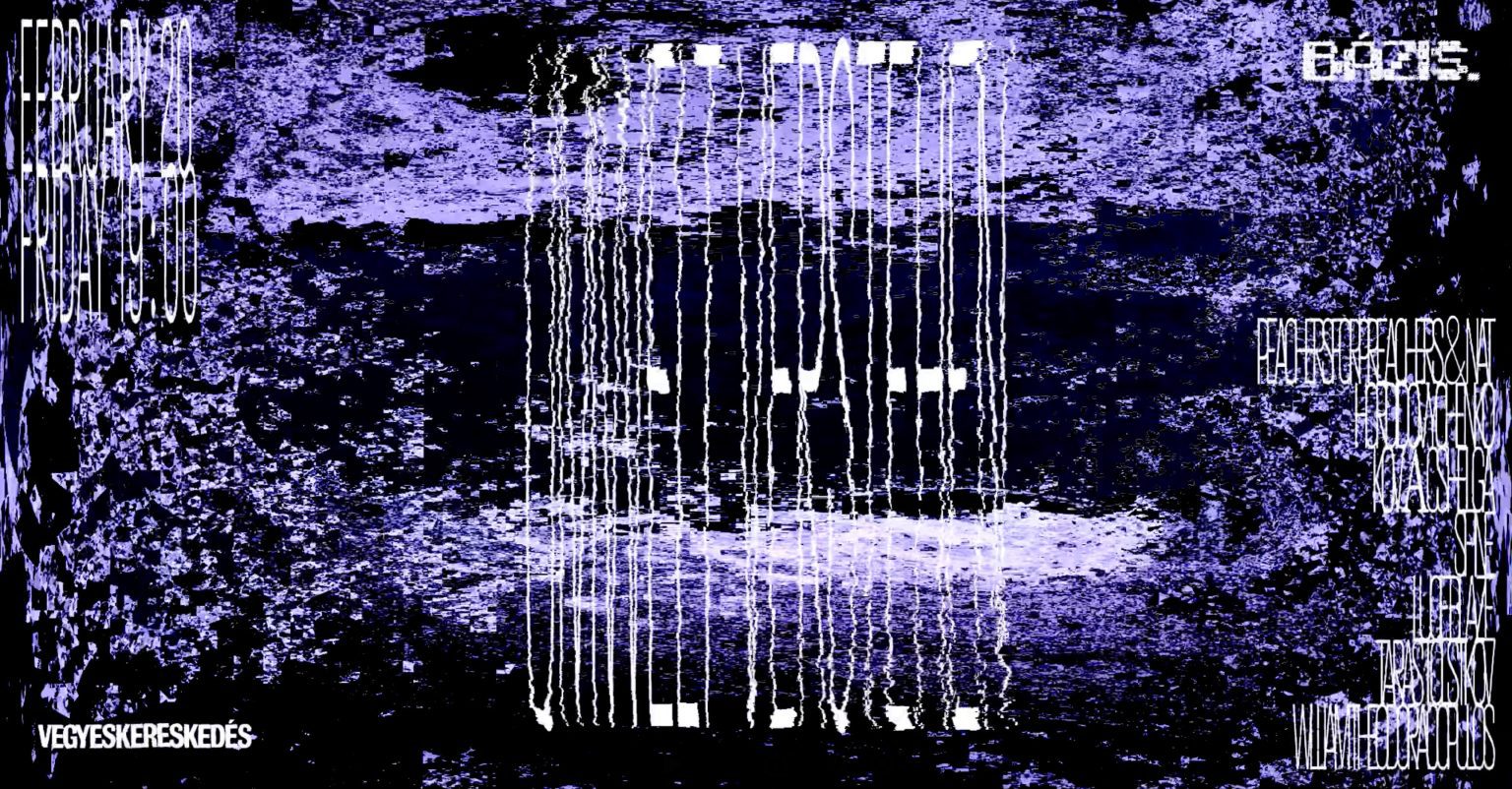
Artists: Hordii Vdovichenko, Helga Kovács, Lucie Blaze, Taras Tolstikov, SHINE, Nat, Peaches for Preachers, William Theodoracopulos.
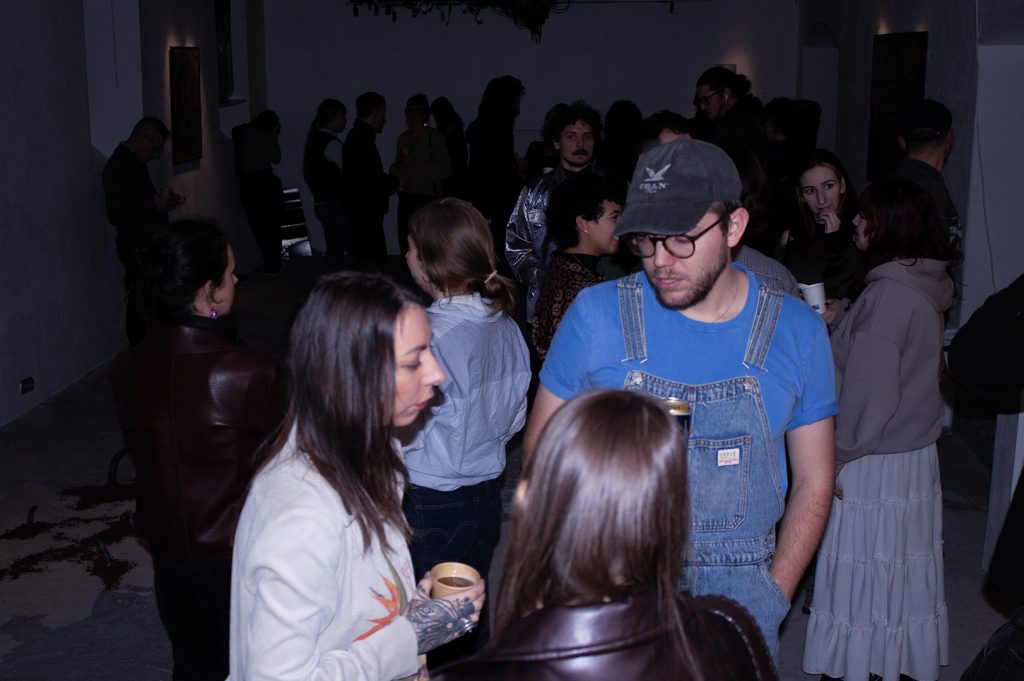
Friday 20.02 | 19:00 – 23:00, Exhibition Opening & Performance.
Saturday 21.02 | 14:00 – 18:00, Workshop: 14:30
Curators: Sasha Hubarieva, Taras Tolstikov
Exhibition Assistant: Laurentiu Boran
BAZIS. Budapest, Horánszky u. 25, 1085
2026
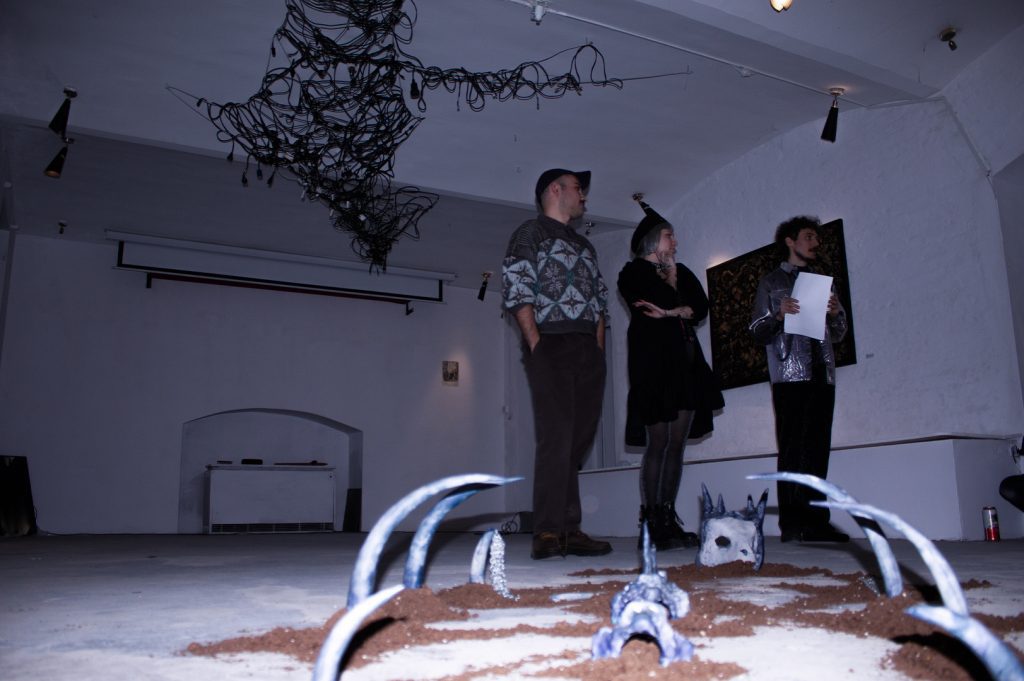
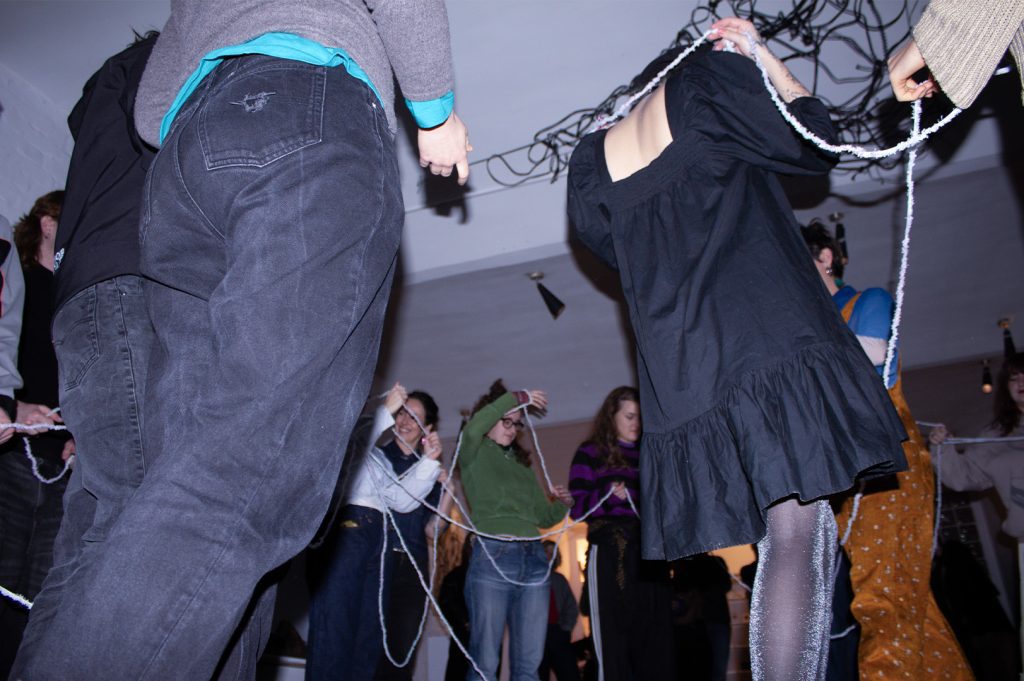
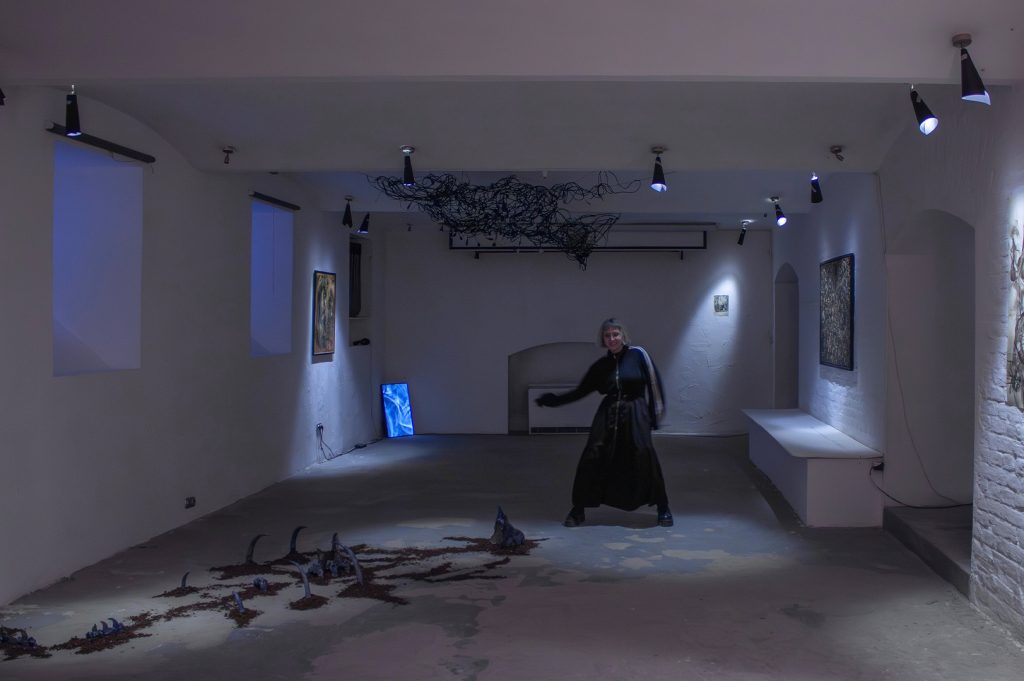
Lucie Blaze
Beyond
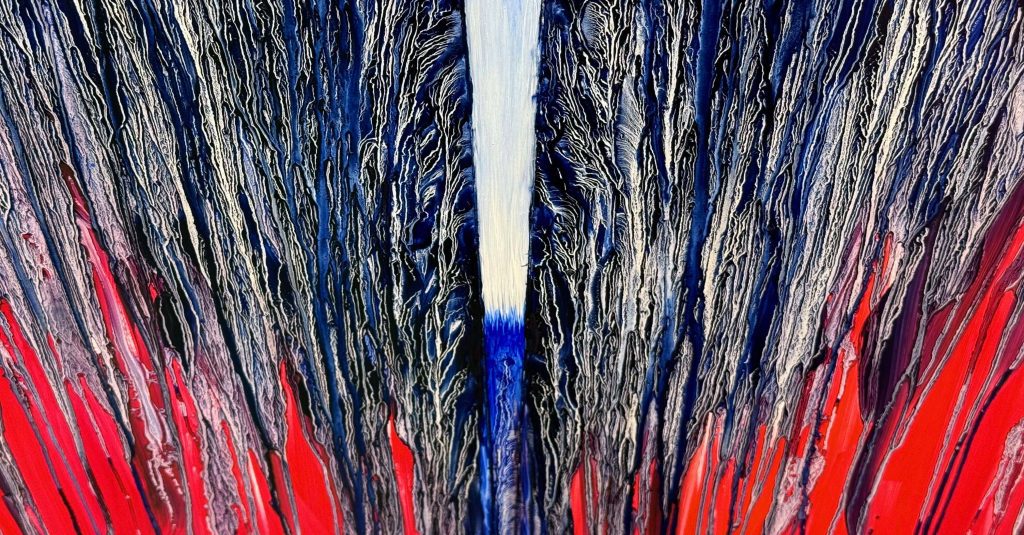
Beyond imagines a form of communication that transcends language, a heightened sensorial and vibrational awareness that expands the boundaries of the “world” as defined by Wittgenstein.
The work evokes an invisible, shared field of human connection where meaning is transmitted through resonance rather than words. At the core of this exploration lies self-awareness: the gradual shift from egocentric perception toward meta-cognition and authentic presence. As the self becomes more attuned, projection and defensiveness dissolve, allowing vibrational truth to emerge, a communication of pure being rather than linguistic distortion. Through abstract visual forms and primal vocalisations, the piece invites viewers to tune into the subtle energetic exchanges that underpin all human interaction. It envisions a future in which communication arises not from language, but from resonance, an embodied field of presence where truth reverberates beyond words. Accompanying the work is a zine containing experiential instructions on how to attune to this field, offering participants a way to intuitively perceive and exchange information with another person through energetic awareness rather than speech.
Hordii Dovychenko
When i see you again
The main inspiration for this project comes from the movement known as “Turgnism”, an ideology that claims a shared origin and cultural unity among Central Asian, Uralic, and sometimes Turkic peoples. It is often used to construct national identity through myth, history, and imagined ancestry.
The central focus of my research explores the presence of dragons and the changing perception of them in Hungarian culture. Just as this movement reshaped cultural narratives, I aim to deconstruct these new made myths in order to create forms of communication with the dragon and the cultural ideas it represents.
For me, belief in dragons acts as an empowering tool, filling the gaps left by uncertainty or fear. It provides strength and confidence through the act of belief itself. Dragons carry layers of cultural memory and meaning, and connecting with them reinforces a sense of identity, belonging, and personal empowerment. By reshaping these myths, the dragon becomes a renewed symbol, drawing attention to its importance and relevance.
Taras Tolstikov
Rape of Democracy
This piece is based on the story of Peanut the squirrel, whose death was turned into a political symbol. In this artwork, the creature becomes a distorted figure to show how small events can be exaggerated and used as tools for outrage.
The piece reflects how easily truth can be stretched, how quickly fear and misinformation can grow, and how democracy weakens when stories are used to divide rather than to understand.
Peanut was an Instagram-famous rescued squirrel kept by caretaker Mark Longo until New York State Department of Environmental Conservation seized and euthanized him in 2024 under state wildlife and rabies-testing laws, sparking outrage when tests later showed he was healthy. The incident quickly became a political flashpoint as Republicans — including JD Vance, Donald Trump Jr., and Elon Musk — used Peanut’s death to attack Democrats as symbols of government overreach, amplifying the story through speeches and social media, while critics noted that the enforcement came from state wildlife officials rather than national Democratic policy.
KOVÁCS HELGA
ANIMUS
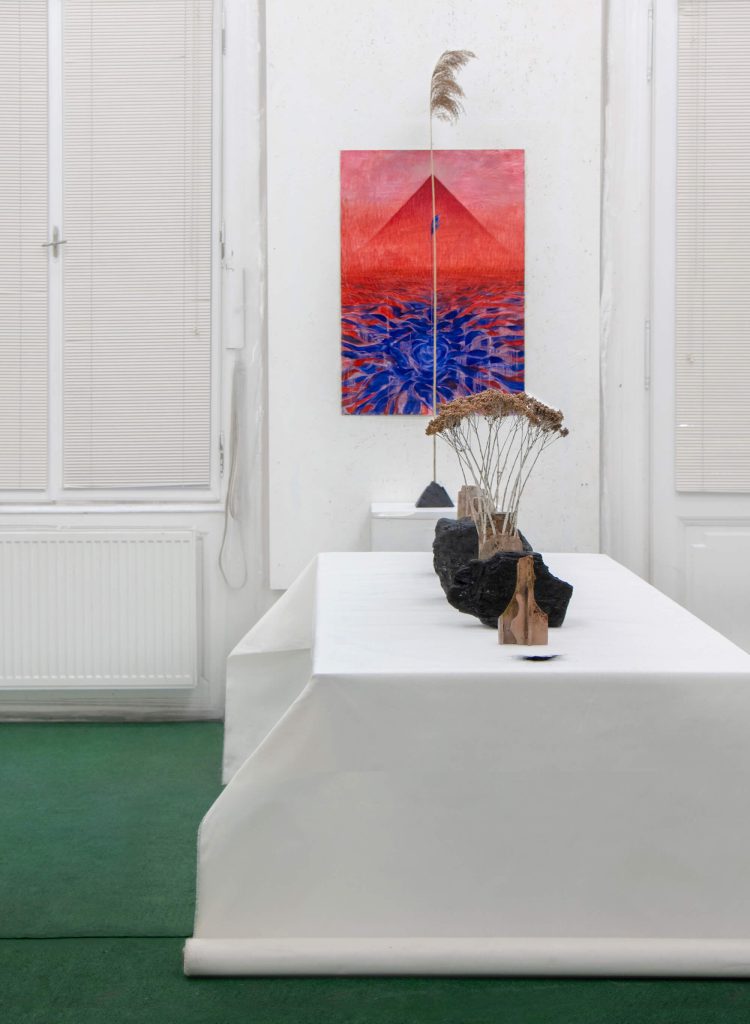
Mixed media – collage, acrylic, walnut stain, pages from the work “Dictionary of the Latin Language” by Henrik Finaly, academic, philologist and archaeologist, published in 1884. On recycled IKEA board
Az „Anima és Animus” című diptychon első darabja –
A történet az időben rejlik
kész a művem
a Világ s vele életem
mindannyiunk sorsa
és terhe
életben tart minket
a Nap és a Hold,
a két bolygónk,
s e kettő közt
kell emberként
ma is boldoguljunk
egységben tehetjük
ha szóval teremtjük
idővel magunkat
emberként felismerjük
itt a saját s a világ
szépséges veszedelme
a halmazok metszete
bolondság az
mi kezemet vezette
itt az idő és a tér pereme
az ő szerepe
a hit kenyere
bennem, mi múlt,
így jut most a jelenbe
rajtam keresztül
jusson a szellem
így nektek is
eszetekbe